Bible Understanding: Methods, Context & Tools for Deeper Study (2026)
Learn how to move from reading the Bible to truly understanding it. Discover proven methods, genre strategies, and tools that build lasting comprehension in 2026.

The gap between reading the Bible and understanding it is wider than most people expect. In 2026, the American Bible Society reported that 64% of Americans who say Scripture transformed their life had read most or all of it - yet only 17% of Americans have actually done so. Most readers never close that gap because they lack a clear method.
Understanding Scripture isn't passive absorption. It's an active discipline with established principles, and the right tools make the difference between years of surface-level reading and the kind of comprehension that shapes how you think and live. Platforms like ScriptureVerse were built to shorten that gap: 31,102 verses and 340,000+ cross-references mapped as an interactive cosmos, with an AI Teacher companion that explains connections in your specific theological context.
This guide covers what Bible understanding means, why it's harder than it looks, and the methods and tools that move readers from familiarity to genuine comprehension.
What Does "Bible Understanding" Actually Mean?
Bible understanding means grasping what a text meant in its original historical and literary context before applying it to modern life, faith, or practice.
This matters because the Bible was written to specific audiences in specific times. A letter Paul sent to believers in Rome in the first century carried immediate meaning its first readers recognized. When we read it today without that context, we risk importing assumptions that weren't there. Hermeneutics - the formal study of interpretation - exists precisely to bridge that gap.
Logos Bible Software's comprehensive hermeneutics guide outlines a principle the Reformers called analogia Scripturae: Scripture interprets Scripture. The text's own patterns and vocabulary define its meaning before outside sources do. That principle is still the starting point for responsible interpretation across Catholic, Protestant, and Orthodox traditions.
Why Do So Many Readers Struggle to Understand Scripture?
Most readers struggle because they approach Scripture as a reference book rather than a unified narrative designed to form them over a lifetime of reading.
BibleProject frames this well: the Bible is a unified story that leads to Jesus, and reading it primarily as a source of moral principles or theological facts causes readers to miss the narrative it was built to tell. That's a structural mismatch between the reader's goal and the text's design.
The data reflects it. The American Worldview Inventory 2026 found that only 4% of American adults hold a biblical worldview. Among Gen Z adults, that number drops to 1%. The problem isn't that people aren't reading - weekly Bible reading rebounded to 42% in 2025 according to Barna's State of the Church report. The problem is that reading outpaces belief and comprehension.
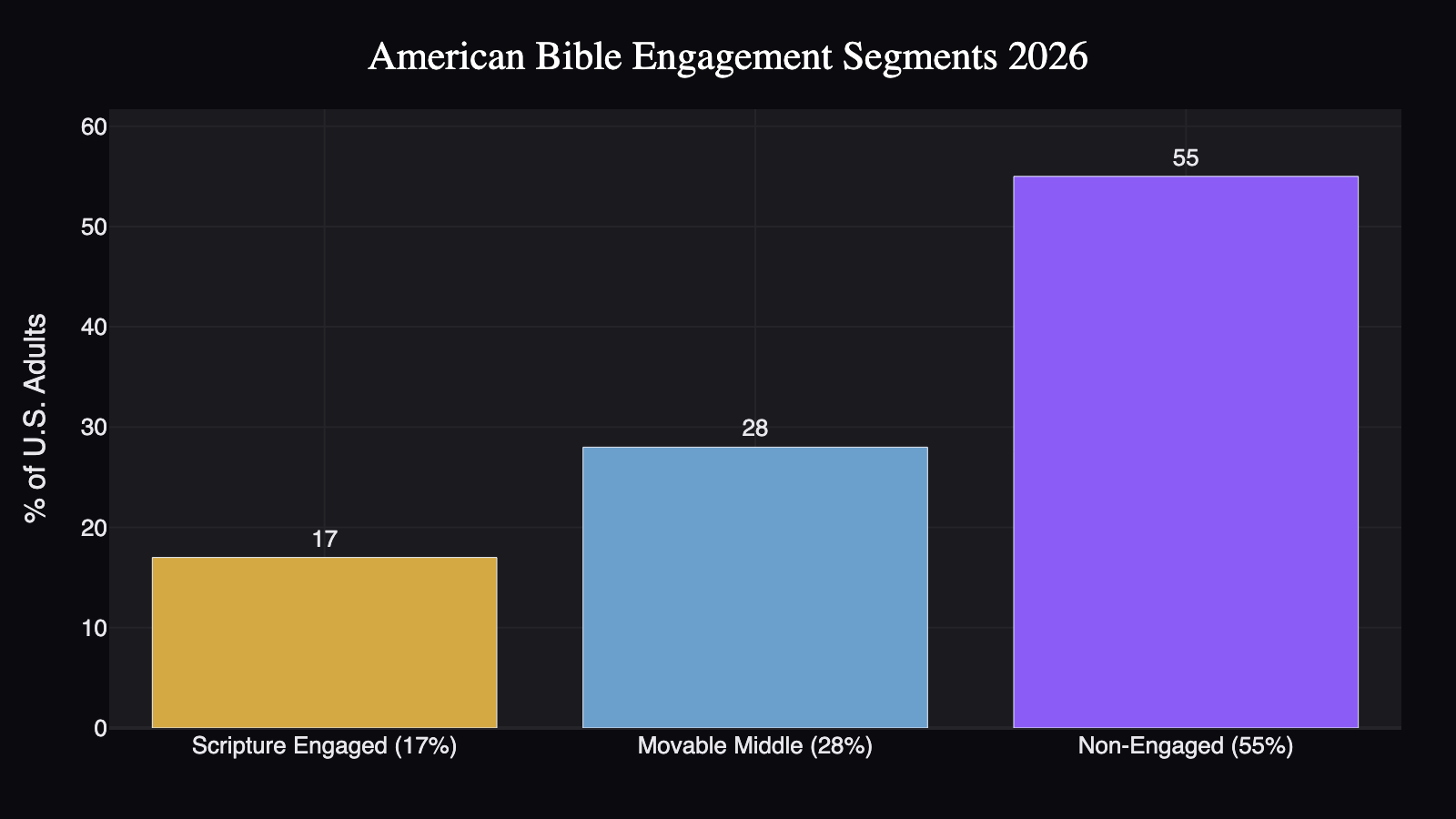
The American Bible Society's 2026 report introduced a useful category: the "Movable Middle." This 28% of the population is curious about Scripture but not deeply engaged. They read occasionally, look things up when something difficult happens, but haven't developed habits that build understanding over time.
What Are the Core Methods for Bible Understanding?
The three core methods for Bible understanding are Observation, Interpretation, and Application - a framework The Navigators have used for decades in discipleship contexts worldwide.
The Navigators' free guide explains inductive study this way: you draw conclusions from within the passage itself rather than imposing external meaning. It sounds obvious, but most casual reading skips the first two steps and jumps straight to application.
Here's how each phase works in practice:
- Observation: Read slowly. Note repeated words, structural markers, and who is speaking to whom. Ask: What type of literature is this? Who wrote it, and to whom? Write down what you don't understand before trying to interpret it.
- Interpretation: Research the historical setting. Use cross-references to see how the Bible uses the same language elsewhere. Consider the original Hebrew or Greek for words that carry specific weight.
- Application: Only after the first two phases can application be grounded in what the text actually teaches. Ask what this reveals about God's character and how it connects to Christ before drawing personal conclusions.
This three-phase method is the foundation of inductive Bible study. For a deeper look at applying these methods across different study sessions, see our Content Bible Studying: Methods, Tools & How to Go Deeper (2026) guide.
How Does Literary Genre Shape Bible Understanding?
Genre shapes Bible understanding because narrative, poetry, prophecy, and epistle each follow different conventions that demand different reading strategies to reach accurate interpretation.
Reading Psalms the same way you read Romans produces confusion. A psalm is a poem, designed to move the reader emotionally and theologically. Romans is a structured theological argument. They require entirely different interpretive postures.
The Logos hermeneutics guide identifies three types of parallelism specific to biblical poetry: synonymous (the second line restates the first), antithetic (the second line contrasts the first), and advancing (the second line develops beyond the first). Miss those structures in Proverbs or Psalms and you'll misread half the book.
Consider Proverbs 3:5: "Trust in the Lord with all your heart and lean not on your own understanding." That's antithetic parallelism. The contrast between trusting God and leaning on yourself is the entire point - not a secondary detail.
| Genre | Key Features | Reading Strategy |
|---|---|---|
| Narrative | Characters, plot, setting | Ask what God is doing, not just what characters do |
| Poetry | Parallelism, imagery, emotion | Identify the parallelism type; don't flatten metaphors |
| Prophecy | Covenant warnings, future hope | Note original audience before applying to today |
| Epistle | Logical argument, specific situation | Follow the argument's structure; read the whole letter |
| Wisdom | Proverbs, principles, patterns | Read as general truths, not universal promises |
| Apocalyptic | Symbolic imagery, cosmic scope | Interpret symbols from Scripture's own imagery first |
What Role Do Cross-References Play in Understanding Scripture?
Cross-references are the connective tissue of Scripture, showing how a single verse in Psalms echoes through Paul's letters and fulfills patterns set in Genesis.
John 3:16 is one of the most cited verses in Scripture - but its meaning deepens when you trace "only begotten Son" back through Genesis 22, where Abraham offers Isaac. The Akedah is the shadow; John 3:16 is the fulfillment. That connection isn't decoration. It's how the biblical authors expected their readers to engage the text.
The challenge is that traditional cross-reference tools present these connections as flat lists. ScriptureVerse maps all 340,000+ cross-references as an explorable 3D network, so you can see which verses carry the heaviest connection traffic, which themes span the entire canon, and how typological patterns move from Old Testament to New. It's the difference between reading a city on a map and walking its streets.
For readers who want to understand faith as a biblical concept rather than a single verse's claim, that network view becomes essential. The cross-reference chains show how the same theme develops across 66 books and multiple centuries.
Pro Tip: When you encounter an unfamiliar passage, trace its cross-references before consulting a commentary. Let the Bible interpret itself first. Commentary should explain what the text shows you - not replace the observation phase.
Which Tools Best Support Deep Bible Understanding in 2026?
The best tools for Bible understanding in 2026 combine original-language access, scholarly commentary, cross-reference networks, and structured reading plans within a single accessible platform.
No single free tool covers every need, but a few well-chosen resources get most readers remarkably far:
- Blue Letter Bible (blueletterbible.org) - Free Strong's Concordance, original-language lexicons, multiple commentaries linked verse-by-verse, and interlinear tools. Strong for word-level investigation.
- BibleProject - Free videos, podcasts, and reading plans that explain each book's structure and canonical place. Strong for big-picture comprehension and narrative context.
- ScriptureVerse - Visualization of the full cross-reference network across 10 lenses (Galaxy, Characters, Themes, Typology, Geography, and more) with an AI Teacher companion that responds to your denomination and theological questions.
- The Navigators' Inductive Study Guide - Free downloadable method guide for building consistent, self-led study habits.
For a broader comparison of what separates surface-level tools from those built for depth, see What Makes a Bible App Good for Deep Study? (2026).
How Do You Move from Reading to Lasting Comprehension?
Lasting Bible comprehension comes from consistent engagement with the whole text, not isolated verses, as shown by the 64% transformation rate among readers who finish most of Scripture.
That statistic from the American Bible Society's 2026 report matters. It's not that finishing the Bible grants some automatic breakthrough - it's that reading the whole text builds the structural familiarity that makes individual passages make sense. You stop reading Romans 8:28 as a standalone promise and start reading it as part of an argument Paul has been building since chapter 1.
Six habits that accelerate the move from reading to comprehension:
- Read whole books, not random chapters. The unit of meaning is usually the book or major section, not the chapter or verse.
- Track the questions you can't answer. Unanswered questions drive better study than comfortable familiarity.
- Use a structured reading plan that keeps narrative sequence visible while you work through individual books.
- Learn basic vocabulary in the original languages for frequently occurring words. You don't need fluency - knowing that the Hebrew word "shalom" carries the weight of wholeness, not just the absence of conflict, changes how you read the Psalms.
- Engage with wisdom literature slowly. Proverbs is designed to form habits of mind over years, not convey information in a single reading.
- Discuss what you're reading with others. Comprehension deepens in community, and the interpretive tradition of the church exists partly because individual readers have always had blind spots.
The State of the Bible 2026 report also notes that readers who engage most deeply with Scripture report the highest levels of sense of calling and well-being. Understanding and transformation aren't separate outcomes. They move together.
 bible-engagement-segments-2026
Frequently Asked Questions
Q: What is the best way to start understanding the Bible as a beginner?
Start with the Gospel of Mark - it's the shortest gospel and the most narrative-driven. Read it in one sitting to catch the flow before studying individual verses. Pair it with BibleProject's video introduction to Mark to understand its structure before diving in.
Q: How long does it take to develop real Bible understanding?
There's no fixed timeline, but consistent reading over one to two years builds the structural familiarity that makes individual passages click. The readers who report the deepest transformation are those who've read most or all of Scripture, which requires sustained, methodical engagement rather than occasional dips.
Q: What is inductive Bible study?
Inductive Bible study is a method that draws conclusions from within the text itself through three phases: Observation (what does it say?), Interpretation (what does it mean in context?), and Application (how does it apply today?). The Navigators popularized this approach for non-academic readers over several decades of discipleship work.
Q: Do I need to know Greek or Hebrew to understand the Bible?
No. Tools like Blue Letter Bible provide original-language definitions without requiring formal language training. A working knowledge of a handful of key Greek or Hebrew terms helps, but most serious Bible understanding happens through careful observation of a good translation.
Q: Why does context matter so much in Bible interpretation?
Because the books of the Bible were written to specific people in specific historical situations. A verse removed from its literary, historical, and canonical context can be made to mean almost anything. Context is the primary safeguard against misreading, and it's where most interpretive errors begin.
Q: What is the difference between Bible reading and Bible study?
Bible reading moves through the text for familiarity and encounter. Bible study pauses over the text to analyze, cross-reference, and interpret before applying. Both matter. Neither alone is sufficient for deep understanding - reading without study builds exposure, study without reading loses the narrative thread.
Q: How do cross-references help with Bible understanding?
Cross-references show how the Bible's authors expected their readers to connect passages across books and centuries. When a phrase from Psalms appears in Hebrews, that connection reveals interpretive decisions made within Scripture itself - which carries more weight than any single commentary's interpretation.
Q: What does it mean that the Bible is a "unified story"?
BibleProject's framework holds that Scripture is one coherent narrative - from creation through fall, covenant, and redemption - that reaches its resolution in Jesus. Treating the Bible as an anthology of independent texts misses the deliberate architecture built across 66 books by multiple authors over more than a millennium.
Ready to see Scripture's hidden connections? ScriptureVerse visualizes every verse and cross-reference as an interactive cosmos. Start exploring →